Two rows in, one stopped
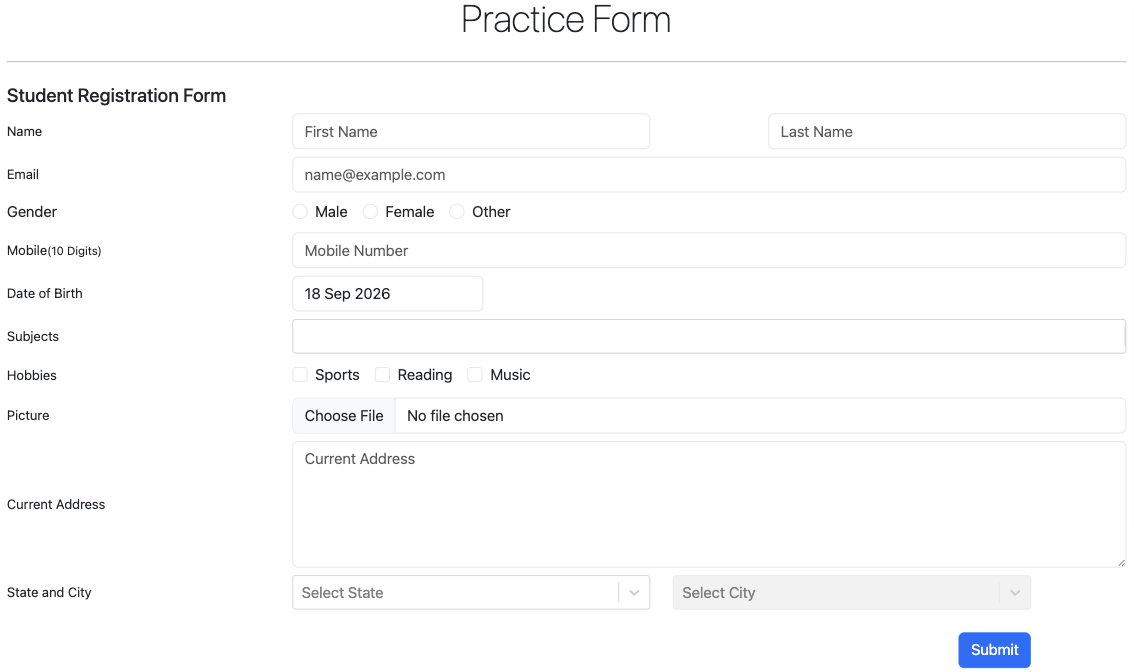
We gave dassi three rows, a public practice form, and the one rule we care about more than speed: if a value is invalid, stop on that row and don’t invent a correction.
The first two rows were clean. dassi filled in all ten values for Maya Okafor, submitted, read the confirmation back (her name, her email, 5550142201, 14 March 1991), closed it, and did the same for Daniel Reyes. Then it got to Lena Fischer, whose email was “lena.fischer@example” with no top-level domain, and whose mobile number was “555019”, six digits in a field that wants ten.
The form refused both. dassi didn’t add “.com”, and it didn’t pad the number. It left the row unsubmitted and reported the two problems in the form’s own words: “Please match the requested format.” and “Please lengthen this text to 10 characters or more (you are currently using 6 characters).”
That matters more on row 140 of a long afternoon than on row 3 of a demo. A plausible fix sails through validation and becomes a bounced email weeks later, when nobody remembers where the address came from.
What we actually ran
A recorded run on September 19, 2026, from a test browser profile, against DEMOQA’s automation practice form, a public page that exists so people can test form tools on it. All three rows were fictional: made-up names, example.com addresses, 555 numbers. The whole thing took 3 minutes 11 seconds.
The form is a decent stand-in for the ones people complain about. Some of the ten values go into awkward controls, like a date picker, a subject box you type into and then pick from, hobby checkboxes, and a city dropdown that stays greyed out until you choose a state. We’d have liked to test the file upload too (the form has one), but our rows didn’t include pictures.
One thing this run can’t show you. A value that’s wrong but valid, say an email with a typo in the name part, passes the form’s check, and we doubt dassi would catch it either, since nothing on the page says it’s wrong. That one is still on whoever typed the spreadsheet.
Where this shows up in real work
A lot of the data entry still done by hand survives because the destination has no import (a supplier portal that takes one order at a time, a benefits portal, the admin screen of an internal tool nobody is going to rebuild), so the rows sit in a spreadsheet and someone copies them across field by field.
dassi does that copying in your browser, signed in as you. If the portal wants a login, it uses your current session or whatever Chrome’s password manager fills in. You never paste a password into a chat or into dassi’s settings, and two-factor prompts and CAPTCHAs come to you.
How much it does without asking is up to you. Mark submitting as something you approve and it waits before each one. Take that off once the column mapping has proved itself, and read the summary at the end instead, which here would have said two rows went in and one needs you.
Teaching it a new form
The first time, you say which column goes into which field and what to do with bad data. Save that as a workflow, and next week’s batch means pointing dassi at the new rows. Lena Fischer, for the record, never got submitted. She doesn’t exist, so she won’t mind.